
It isn’t the most obvious career path. Palynologist. Stratigrapher. Oil and gas engineer. And now a lot of time spent looking at seagrass.
Looking back, though, the line through it is fairly straight. It starts with mud.
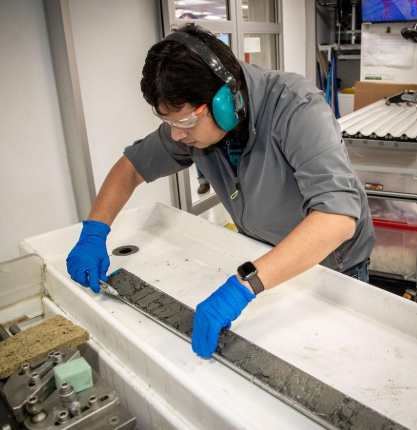
My first job was studying prehistoric marine life. I worked as a palynologist and stratigrapher. If you’ve never heard of a palynologist, that makes sense. I spent my days looking at tiny fossilised particles — mainly prehistoric dinoflagellates and the cysts they left behind, called dinocysts. Microscopic. Extremely old. Most of them came from marine sediments.
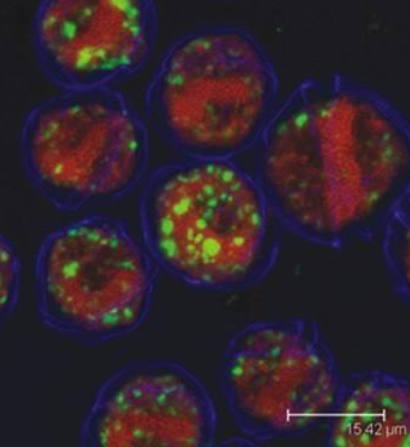
That meant a lot of time staring at what most people would call mud. But the mud held a record. The organisms that once lived in the sea left traces of where they lived, when they lived, and what the marine environment was like. Because those sediments built up over time, they became a history of what had happened in the sea millions of years ago. It was my first real lesson that sediment carries a story. I just didn’t know then that I’d come back to it.
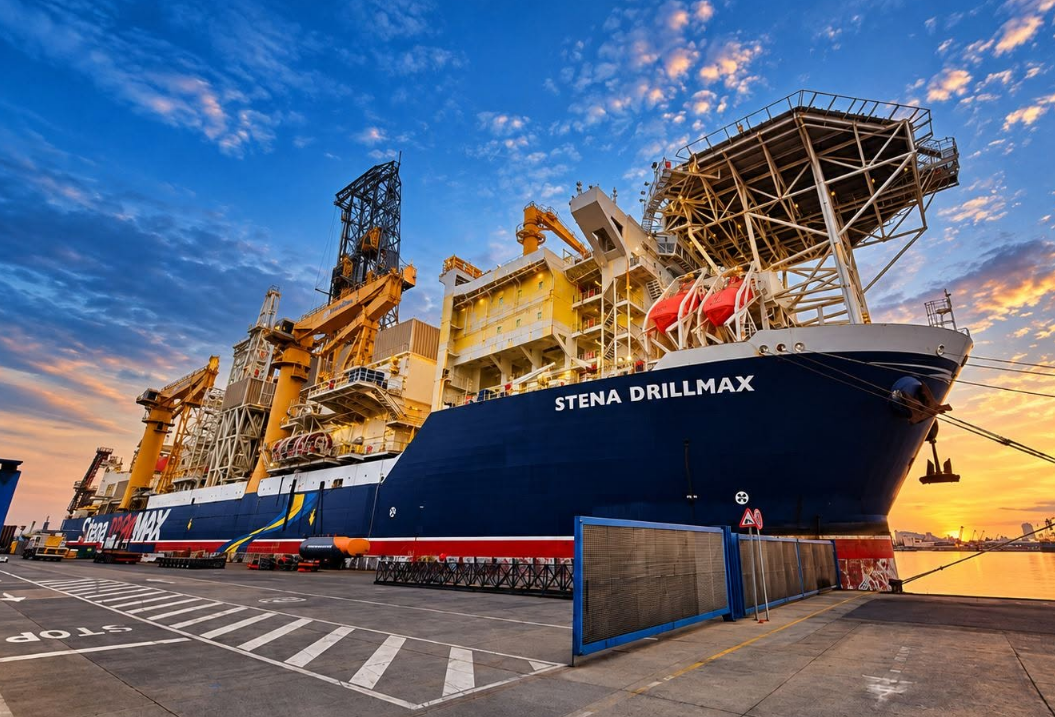
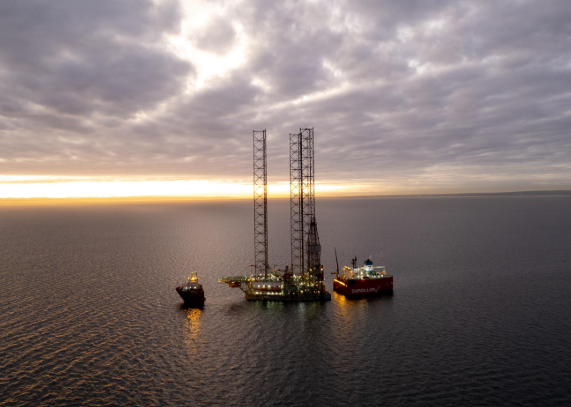
The career then went somewhere else entirely. I moved into offshore oil and gas and into engineering. The scale jumped. Massive equipment, subsea systems, drilling, pressure control, risers, BOPs, marine operations. The offshore world is unforgiving. Things have to be designed properly, tested properly, and made to work. When you’re dealing with high pressures, heavy gear and people working offshore, “probably fine” isn’t good enough.
That part of the job taught me different lessons. Systems matter. You need to understand how things interact. You need to know the failure modes. You need procedures, controls, and records. Most of all, you need to be able to repeat something and trust the result. That was my world for years.
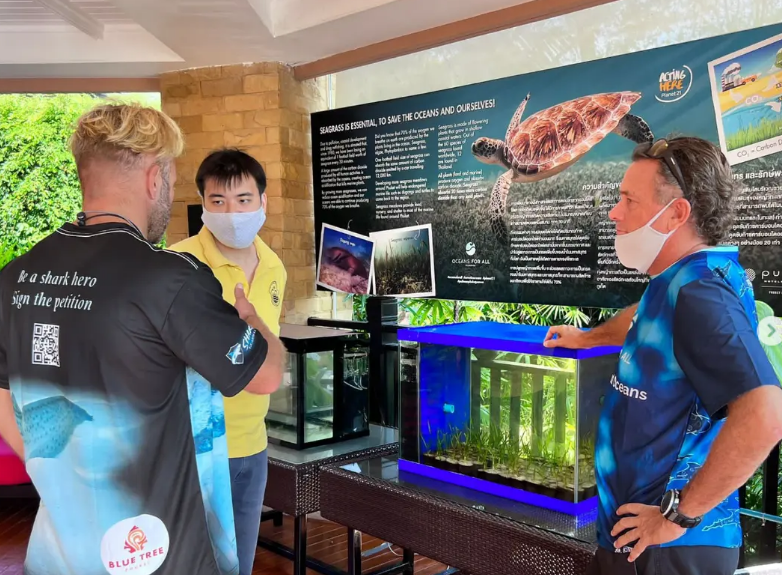
Then Thailand. After a long stretch in oil and gas I ended up there and got properly interested in seagrass. Not the idea of it — the actual plant, the ecosystem, the biology, the sediment, the relationship between the plant and everything around it. I worked as a PhD student on Enhalus acoroides at Song Kla Uni Phuket. If you look at tropical seagrass, Enhalus is one of the heavyweights. Long leaves, deep roots and rhizomes, big underground structures. When the conditions are right it forms serious habitat.
I found myself back at a microscope. Only this time I wasn’t looking at fossilised organisms in ancient mud. I was looking at a living marine plant.
Under the microscope seagrass becomes a different place. You start seeing structures that are invisible when you’re swimming over a meadow — the tissues, the cells, the roots, the rhizomes, the way the plant interacts with its surroundings. You stop seeing “a patch of grass underwater” and start seeing a working biological system. That shifted how I looked at it. It also joined two things that had previously felt separate in my career: marine sediments and marine biology.
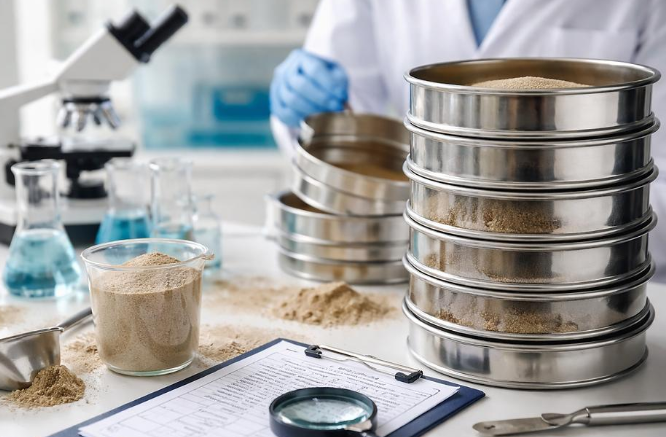
The sediment I’d studied at the beginning wasn’t just dead material on the seabed. It moves. It settles. It carries information. It interacts with the organisms living in it. And it can change the environment those organisms depend on.
Once you start treating an ecosystem as a system, the engineering questions arrive on their own. What are the inputs? What are the outputs? What changes it? What are the failure modes? What can you measure? How do you set a baseline? How do you know something has actually changed? Can you separate natural variation from outside influence?
I’m not saying an ecosystem is an oil rig. It isn’t. Natural systems are far more complicated. But the basic idea still holds: understand the system before you try to manage it.
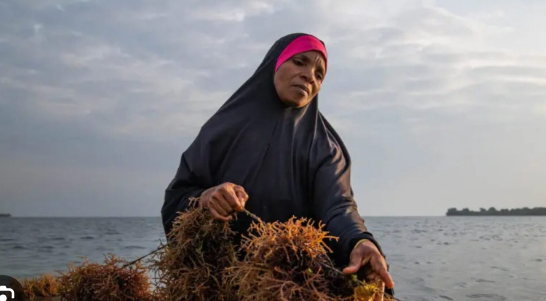
That’s where Zanzibar comes back in. I’ve been coming here for more than fifteen years. For a long time I just enjoyed the place. Then the interest in marine systems grew through the work in Thailand, and eventually I started looking at Zanzibar differently. The seagrass wasn’t just something I swam over. The sediment wasn’t just something that made the water cloudy. A reef wasn’t just something to photograph. They were parts of a system.
And now that Zanzibar is developing fast, I keep coming back to the same questions I used to ask offshore. What is changing? How do we measure it? And can we tell the difference between natural variation and the effects of what we’re building on the coast?